

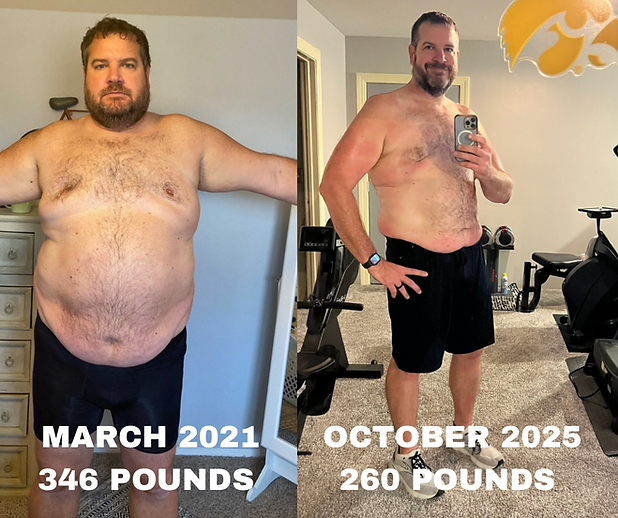
My Progress
Heaviest: 346 lbs (March 2021)
Progress: 253 lbs (January 2026)
I tried just about everything before starting medication-assisted weight loss… different workouts, cleaner eating, and every ‘do it on your own’ strategy I could think of. I showed up, I tried hard, and I kept trying. But the progress never matched the effort. In October 2024, I began my GLP-1–supported weight-loss journey, and that’s when things finally started to shift. That was the turning point where real, sustainable progress began.
How GLP-1 Works for Weight Loss
GLP-1 for Weight Loss - The Quick Run Down
GLP‑1 (glucagon‑like peptide‑1) is a hormone that tells your brain you’re full and helps your pancreas release insulin. When you boost its activity—through injections like semaglutide or tirzepatide—you often see:
In the Brain:
-
Reduces appetite & cravings
-
Increases satiety (feeling full)
-
Regulates food intake
In the Pancreas:
-
Stimulates insulin release (when blood sugar is high)
-
Supresses glucagon secretion (which raises blood sugar)
-
Helps lower blood sugar levels
In the Stomach:
-
Slows down gastric emptying (the rate at which food leaves your stomach)
-
Promotes a feeling of fullness, helping you eat less
GLP-1 Based Medications
Medications like semaglutide (Ozempic or Wegovy) and tirzepatide (Mounjaro or Zepbound) mimic the effects of GLP-1. They amplify the natural actions of GLP-1, leading to significant weight loss and improved blood sugar control. These medications have longer half-lives than natural GLP-1, meaning they stay in your system longer and provide sustained benefits.
Semaglutide (Ozempic, Wegovy)
-
GLP-1 receptor agonist
-
Administered via
weekly injection -
Effective for weight loss
and blood sugar control
Tirzepatide (Mounjaro or Zepbound):
-
GLP-1 and GIP receptor agonist
-
Administered via weekly injection
-
Potentially even more effective for weight loss and blood sugar control compared to semaglutide

Benefits of GLP-1 Medications for Weight Loss
-
Significant Weight Loss: Studies have shown an average weight loss of 15% with GLP-1 medications.
-
Improved Blood Sugar Control: Effective for managing type 2 diabetes.
-
Reduced Appetite: Helps control cravings and reduces overall food intake.
-
Cardiovascular Benefits: May reduce the risk of heart disease in some individuals.
Important Note: GLP-1 medications are prescribed under the guidance of a healthcare professional. It's crucial to discuss potential side effects and interactions with other medications with your doctor before starting treatment.
This infographic provides a simplified overview of GLP-1 and its role in weight loss. Consult with your healthcare provider for personalized medical advice.
What to expect on a GLP-1 Regimen
-
First few weeks – You’ll start with a low dose that’s gradually increased. Most people notice a mild reduction in appetite and a feeling of “fullness” after meals.
-
Side effects – Nausea, occasional constipation or mild stomach cramping are common at the start, usually fading after a week or two.
-
Weight loss timeline – Many see 5–10 % of body weight lost in the first 3 months; the biggest drop often happens in the first 8–12 weeks.
-
Blood‑sugar impact – If you have pre‑diabetes or type 2 diabetes, you’ll likely see lower fasting glucose and fewer spikes.
-
Monitoring – Your clinician will check blood pressure, kidney function and, if you’re on other meds, adjust dosages as needed.
-
Lifestyle pairing – The medication works best when you add simple habits: protein‑first meals, a 15‑minute “digital curfew,” and short, consistent movement.
Bottom line: GLP‑1 is a tool that can jump‑start weight loss and metabolic health, but sustainable results come from combining it with the right habits.
Curious about how it could fit into your personal plan? Let me know what you’d like to dive deeper into!
Practical Tips for Getting the Most Out of a GLP‑1 Regimen
-
Start low, go slow Your doctor will begin with a small dose and increase it every few weeks. Stick to the schedule; it reduces side‑effects like nausea.
-
Stay hydrated Drink at least 8 oz of water before each meal. It helps the “fullness” signal and eases stomach upset.
-
Protein‑first meals Aim for 30 g of protein (e.g., eggs, Greek yogurt, lean meat, or a protein shake) within the first 30 minutes of eating. It blunts hunger and preserves muscle.
-
Mind the carbs Cut back on refined sugars and simple carbs. They can trigger rapid blood‑sugar spikes and increase cravings.
-
Add a short walk A 15‑minute walk after meals improves insulin sensitivity and helps the drug work better.
-
Set a “digital curfew” Turn off screens at least 30 minutes before bedtime. Better sleep supports weight loss and hormone balance.
-
Track basics Keep a simple log of weight, waist measurement, and how you feel each week. Small wins are motivating and give your clinician data to fine‑tune the dose.
-
Watch for side‑effects Mild nausea, constipation, or stomach cramping usually fade after a week or two. If they persist, let your provider know; a dose adjustment can help.
-
Stay consistent Take the injection at the same time each day. Consistency keeps drug levels steady.
-
Pair with a support plan Whether it’s a weekly check‑in, a community group, or a coach, having accountability boosts long‑term success.
Quick recap: low dose → gradual increase, hydrate, protein‑first, short walks, good sleep, track progress, manage side‑effects, stay consistent, and lean on support.
Combining GLP-1 with Lifestyle Changes
GLP-1 + Lifestyle = Faster, Safer Results
GLP‑1 drugs curb appetite and improve blood‑sugar control, but they work best when you give them a supportive environment. Think of GLP‑1 as a “boost” and lifestyle habits as the “fuel” that keeps the engine running smoothly.

Key Lifestyle Levers
-
Protein‑first meals 30 g of protein at breakfast and each main meal helps keep you full longer and preserves lean muscle while you lose weight.
-
Low‑glycemic carbs Cutting refined sugars and simple carbs reduces blood‑sugar spikes, which lessens the need for extra insulin and eases side‑effects like nausea.
-
Consistent movement A 15‑minute walk after meals or a short strength‑training session 2‑3 times a week boosts insulin sensitivity and amplifies the fat‑burning effect of GLP‑1.
-
Sleep hygiene Aim for 7‑8 hours of uninterrupted sleep. Poor sleep raises cortisol, which can blunt GLP‑1’s appetite‑suppressing signal.
-
Stress management Chronic stress spikes cortisol and can trigger emotional eating. Simple practices (deep breathing, a 5‑minute “brain dump”, or a daily gratitude note) help keep the hormone balance in check.
-
Hydration Drinking a glass of water before meals can further reduce calorie intake and lessen gastrointestinal side‑effects. GLP-1s can cause dehydration. Drink 1/2 your body weight in ounces each day.
What' You'll Notice
Weeks 1‑4 Reduced hunger, steadier energy, maybe a mild “full” feeling after meals.
Weeks 4‑12 Weight loss accelerates (often 0.5–1 lb per week), blood‑pressure and fasting glucose numbers improve, and you feel less “foggy”.
Beyond 12 weeks The lifestyle habits you’ve built become the main driver of maintenance, while GLP‑1 helps lock in the new set point.

Quick Starter Checklist
-
Breakfast: 30 g protein + veggie + a small portion of whole‑grain carbs.
-
Walk: 10‑15 min after lunch and dinner.
-
Hydrate: 1/2 your body weight in ounces each day.
-
Screen curfew: Lights out 30 min before bedtime.
-
Log: Weight, waist, and a 1‑sentence mood note each night.
If any of these pieces feel tricky to fit into your routine, let me know—I can help you tailor a simple plan that works for you.
What is a GLP-1 / GIP Peptide
What they are and how they differ from Pure GLP-1
GLP‑1 / GIP peptides are engineered molecules that activate both the glucagon‑like peptide‑1 (GLP‑1) receptor and the glucose‑dependent insulinotropic polypeptide (GIP) receptor. In nature, GLP‑1 and GIP are separate gut hormones released after a meal; they each tell the pancreas to release insulin, slow stomach emptying, and signal the brain that you’re full. By mimicking both signals at once, a dual‑agonist (the best‑known example is tirzepatide) provides a “tag‑team” effect on appetite, glucose control, and fat metabolism that a pure GLP‑1 peptide can’t match on its own.
Key differences between a GLP‑1‑only peptide and a GLP‑1 / GIP dual agonist
-
Receptor activation – GLP‑1‑only hits only the GLP‑1 receptor; the dual peptide hits GLP‑1 and GIP receptors.
-
Appetite suppression – Both reduce hunger, but the extra GIP signal often produces a stronger, more sustained feeling of fullness.
-
Insulin response – GLP‑1‑only boosts insulin in a glucose‑dependent way; GIP adds an additional insulin‑stimulating kick, especially at lower glucose levels.
-
Weight‑loss magnitude – Clinical trials show the dual agonist can drive 20 % body‑weight loss.
-
Side‑effect profile – Both cause nausea and GI upset, but many patients report slightly less early nausea with the dual peptide; GIP can modestly increase bowel movements.
-
Metabolic benefits – GIP may enhance fat burning and improve adiponectin levels, offering extra metabolic advantages beyond appetite control.
-
Safety & monitoring – Both require medical supervision, but the dual peptide’s broader receptor activity means clinicians may monitor blood pressure, kidney function, and glucose more closely, especially early in the titration phase.
If you’re deciding between a pure GLP‑1 peptide and a dual GLP‑1 / GIP option, consider how much weight‑loss speed and extra metabolic support matter to you, and discuss the trade‑offs with your provider.
Other Peptides that Support Metabolism
Metabolic Peptides — What They Are & How They Fit Into Your Plan
Metabolic peptides are short chains of amino acids that act as signaling molecules, tweaking things like appetite, fat‑burning, insulin sensitivity, and recovery. When used under medical supervision, they may accelerate the results you see from diet, exercise, and GLP‑1 therapy.
Key Players
-
GLP‑1 Main driver of appetite suppression and weight loss.
-
GLP-1/GIP Works with GLP‑1 to boost insulin release and improve glucose control.
-
Sermorelin Stimulates growth‑hormone release, supporting muscle repair and deeper sleep.
-
Ipamorelin & Tesamorelin Growth‑hormone secretagogues that help preserve lean mass while you lose fat.
-
BPC‑157 Promotes tissue repair and reduces inflammation, helpful for joints that take a beating.
-
TB‑500 Supports cellular migration and healing, good for recovery after intense workouts.
-
NAD+ precursors (e.g., Nicotinamide Riboside) Boost cellular energy, aiding fatigue and brain fog.
How They Work Together
-
Appetite & Glucose Control GLP‑1 + GIP keep hunger down and blood sugar stable.
-
Hormone Balance Sermorelin, Ipamorelin, and Tesamorelin raise growth hormone, preserving muscle while you’re in a calorie deficit.
-
Recovery & Injury Prevention BPC‑157 and TB‑500 speed up tissue repair, letting you train harder without setbacks.
-
Cellular Energy NAD+ precursors combat the “energy crash” that often follows weight loss.
Practical Tips
-
Medical oversight is non‑negotiable. Dosing, lab monitoring, and safety checks should be handled by a qualified provider.
-
Pair peptides with the basics: protein‑first meals, consistent movement, and good sleep amplify results.
-
Track: Keep a simple log of weight, body measurements, sleep hours, and any side effects. Share this with your clinician each visit.
If any of these peptides intrigue you—or you want to know which might be a good fit for your current goals—just let me know and we can dive deeper.
IMPORTANT TO NOTE
The information provided on this website is for educational and informational purposes only and should not be considered medical advice. While I am a Paramedic, I am not a licensed medical provider, and the content shared here should not be used to diagnose, treat, cure, or prevent any disease or health condition. Always consult with a qualified healthcare professional before making any changes to your health, wellness, or supplement routine.
Some links on this website may be affiliate links. This means that if you click on a link and make a purchase, I may receive a small commission—at no additional cost to you. These commissions help support the content and resources shared here. I only promote products and services I personally use or genuinely believe in.
As every individual is special and unique, results may vary.
Please note compounded medications not FDA-approved, and their safety and efficacy have not been independently verified by the FDA. Potential side effects and long-term impacts are still being studied. Always consult your licensed healthcare provider or primary care professional before beginning any new treatment.
As a Paramedic, patient safety has been paramount throughout my career. While there are many places to order medication online, the telehealth company I partner with works exclusively with 503A Compounding Pharmacies in the U.S. These facilities are state-licensed and strictly governed by the United States Pharmacopeia (USP). This regulation mandates rigorous adherence to standards for sterility, purity, and quality of all raw ingredients. When receiving customized compounds—like peptides—this commitment ensures your medication is built on the highest safety and ethical standards. You can be confident that your performance protocol is built on uncompromised quality.